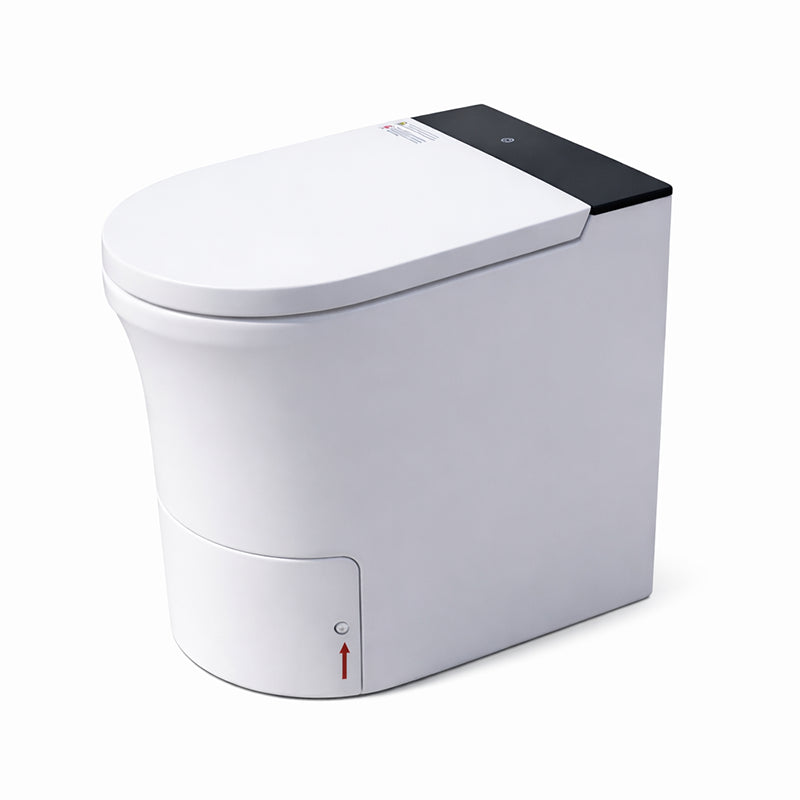
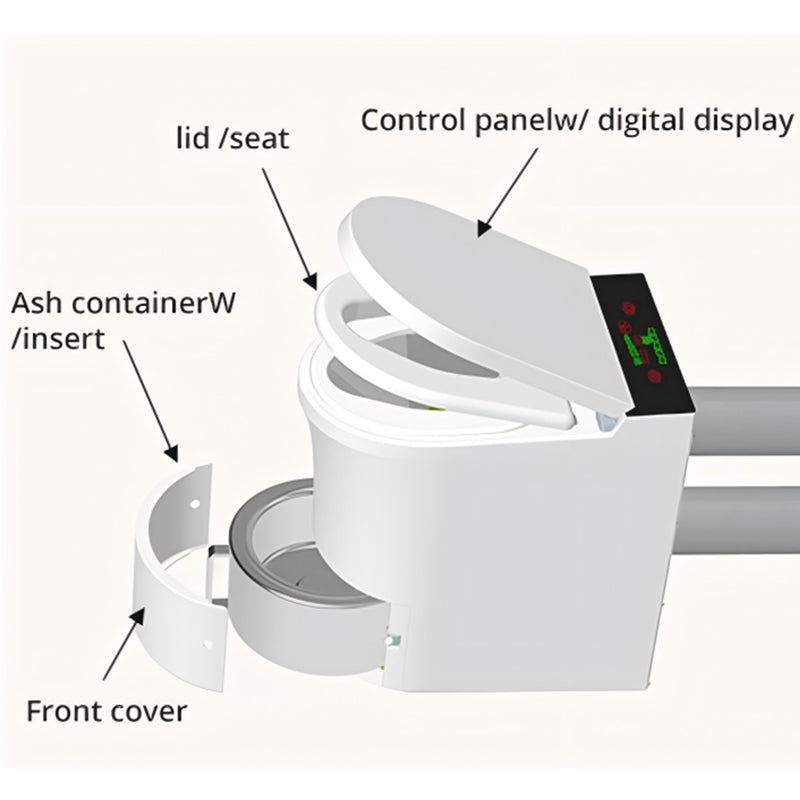
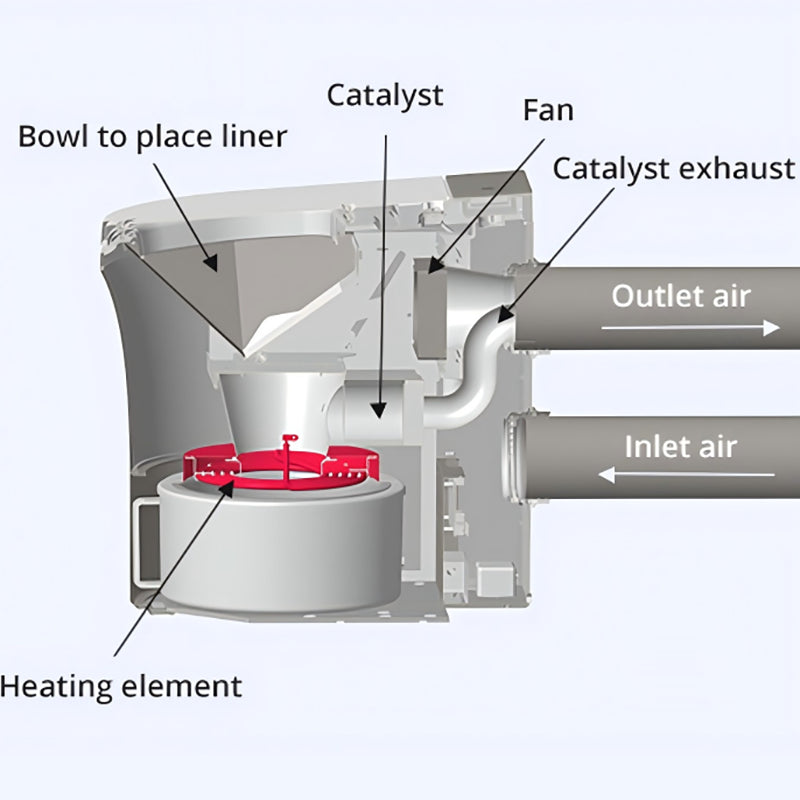
An incinerating toilet uses high heat to burn waste completely after each use, leaving behind only a small amount of sterile ash. There is no liquid waste, no holding tank and no connection to a water supply or sewer needed. Electric incinerating toilets are fully automated and handle the entire process at the press of a button, making them one of the most low-maintenance off-grid sanitation options available today.
Who Uses an Electric Incinerating Toilet?
Electric incinerating toilets are widely used by off-grid homeowners, cabin owners, boat users and anyone living or working in a remote location where installing plumbing is not practical or permitted. They are also a strong choice for tiny homes, hunting and fishing lodges, sheds and outbuildings, and properties where local regulations restrict the installation of a septic system. If you need a toilet that works completely independently of any infrastructure, an incinerating toilet is worth serious consideration.
Electric Incinerating Toilet for Off-Grid Cabins
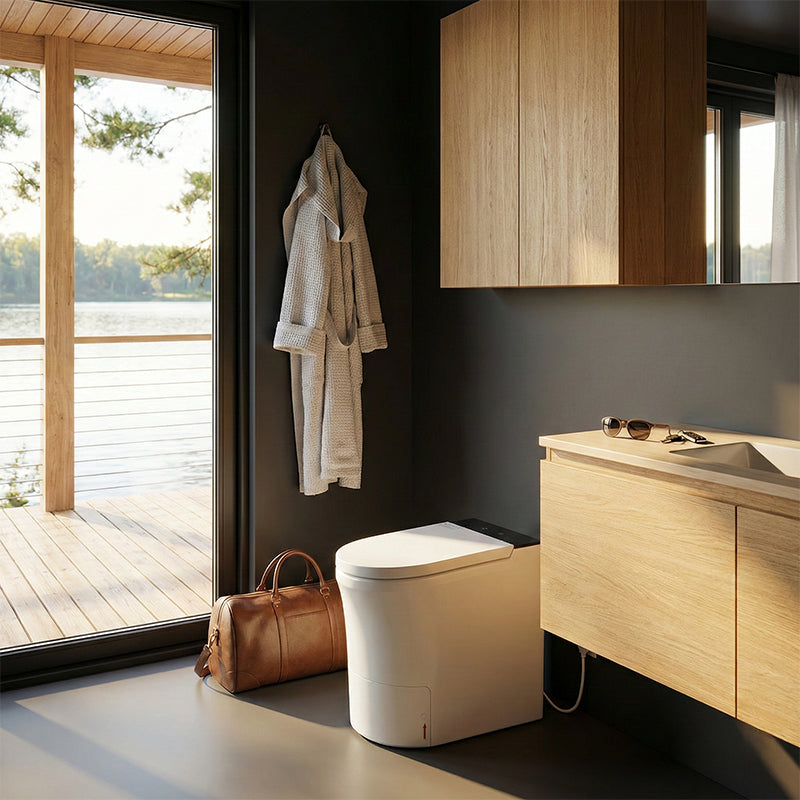
Off-grid cabins are one of the most common applications for an electric incinerating toilet. When a cabin is located on land where a septic system cannot be installed — due to local regulations, soil conditions or cost — an incinerating toilet provides a permanent, low-maintenance solution with no holding tank to empty and no waste to handle. All that is needed is a power connection and a flue pipe routed through an exterior wall or ceiling. The ash produced after each use amounts to roughly a teaspoon and is completely sterile, requiring emptying only every few weeks depending on frequency of use.
Incinerating Toilet vs Composting Toilet
Both options work without water or plumbing, but the way they handle waste is quite different. A composting toilet relies on biological decomposition, which takes time and requires regular turning, moisture management and ventilation. An electric incinerating toilet burns waste immediately after each use, producing only ash. This means less ongoing maintenance, no smell between uses and a consistent result regardless of the season or temperature.
Why Choose a Modiwell Incinerating Toilet?
Modiwell electric incinerating toilets are built for permanent and semi-permanent off-grid installations. Each unit requires only a power connection and a flue pipe for venting outdoors. No water supply is needed and no septic tank is required. All Modiwell products ship free to the United States, Canada and Australia and come with an 18-month warranty. Our customer support team is available Monday to Friday, 9am to 6pm EST.