
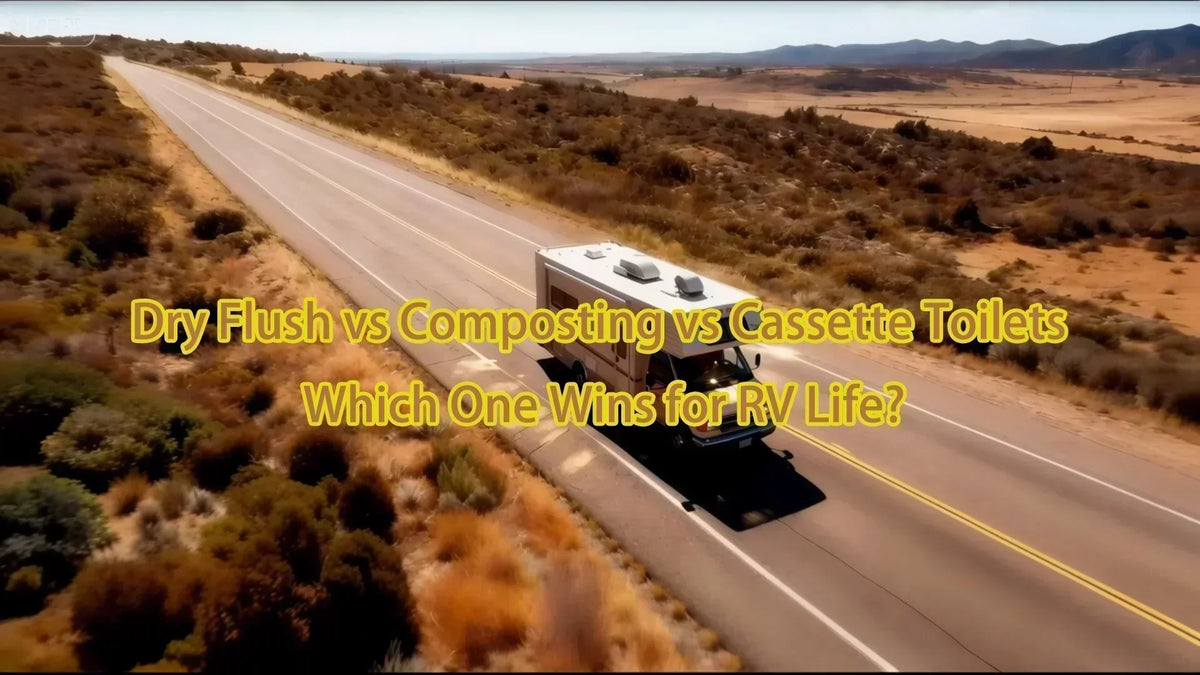
Dry flush toilets are strong options for odor control, zero water use, and easier waste handling. Composting units are eco-friendly but maintenance-heavy. Cassette toilets are affordable, but odor and dump-station hassles can make them inconvenient.
The RV Toilet Dilemma
When you hit the road in your van, trailer, or RV, one question always comes up:
Which toilet setup keeps life clean, simple, and easy to manage for odors?
After comparing dry flush, composting, and cassette toilets across real travel scenarios, the result is clear: convenience and hygiene matter more than tradition.
Quick Comparison Table
| Toilet | Dry Flush Toilet | Composting Toilet | Cassette Toilet |
|---|---|---|---|
| Odor Control | Uses a sealed system with strong odor control. | Requires stirring and ventilation; performance depends on the environment. | Chemical odor can be obvious, and sealing is often average. |
| Water Usage | No water required | No water required | Approximately 2-3 liters per use |
| Maintenance Frequency | Consumables need to be replaced. | Stir daily and clean the container regularly. | Empty the waste tank regularly. |
| Waste Disposal | Once sealed, it can usually be disposed of as normal trash, subject to local regulations. | Can be composted under certain conditions. | Must be emptied at a designated waste disposal station. |
| Applications | Short trips, camping, RVing, and off-grid scenarios | Long-term off-grid settlement or permanent use | Campsites or trailers with fixed sewage systems |
| Ease of Maintenance | Simple maintenance with replacement refill packs. | More complex; requires humidity and ventilation management. | Requires regular chemical cleaning. |
| Overall Features | Water-free, sealed, and convenient. | Environmentally friendly but maintenance-heavy. | Low cost, but requires water storage and waste tanks. |
Why Dry Flush Toilets Win
Dry-flush systems use sealed bags and a coagulant that solidifies waste. Each flush wraps and seals waste without water or plumbing, helping control odors and simplify disposal.
Example: Modiwell LE-310 dry flush portable toilet
- 16.5 lbs lightweight design
- Approx. 100 uses per charge
- Supports 330 lbs
- One-touch sealing
- EN 13432 compostable bags
Great for RVs, van life, boats, off-grid cabins, and emergency home care.
Composting Toilets: Great Idea, Hard Reality
They sound eco-friendly, but real users know the pain: stirring, venting, and cleaning. Moisture can ruin the compost mix, and in small RVs, odor control can fail quickly. They are best suited for stationary off-grid cabins with airflow and time to manage waste.
Cassette Toilets: Old but Smelly
Cassette toilets are the budget pick: simple tanks with chemicals and water. They work, but odor and dump-station hassle can make them inconvenient. Every few days you may need to find a place to empty the cassette, which limits the freedom many van-lifers want.
Real-World Verdict
Dry flush: modern convenience, waterless operation, and simpler maintenance.
You may pay more upfront, but gain comfort and cleanliness on the road.
No chemicals, no plumbing, and no public dump sites for sealed bag disposal where local rules allow.
FAQ
Does a dry flush toilet smell?
Dry flush toilets use sealed bags and coagulant to help control odors after each use.
Are dry flush consumables expensive?
Modiwell dry flush toilet refills require no water, chemical cleaning agents, or sewer station. The packaging is sealed and durable. The price is slightly higher than basic bags, but the experience and convenience can outweigh the difference for many users.
Will long-term use of a dry flush toilet cause malfunctions or wear?
We recommend regularly checking the battery status and following the user manual for storage and maintenance. If you have any questions, please contact us immediately.
Related Articles
Laveo Dry Flush Toilet Alternative: A New Standard in Eco-Friendly Portability
5 Reasons a Dry Flush Toilet Is a Practical Solution for Your RV
Share:
Rv Black Water Tank Sensor Failure? Here's the Easy Fix
RV Black Tank Cost vs Modiwell Dry Flush Toilet Cost: A Real Comparison