
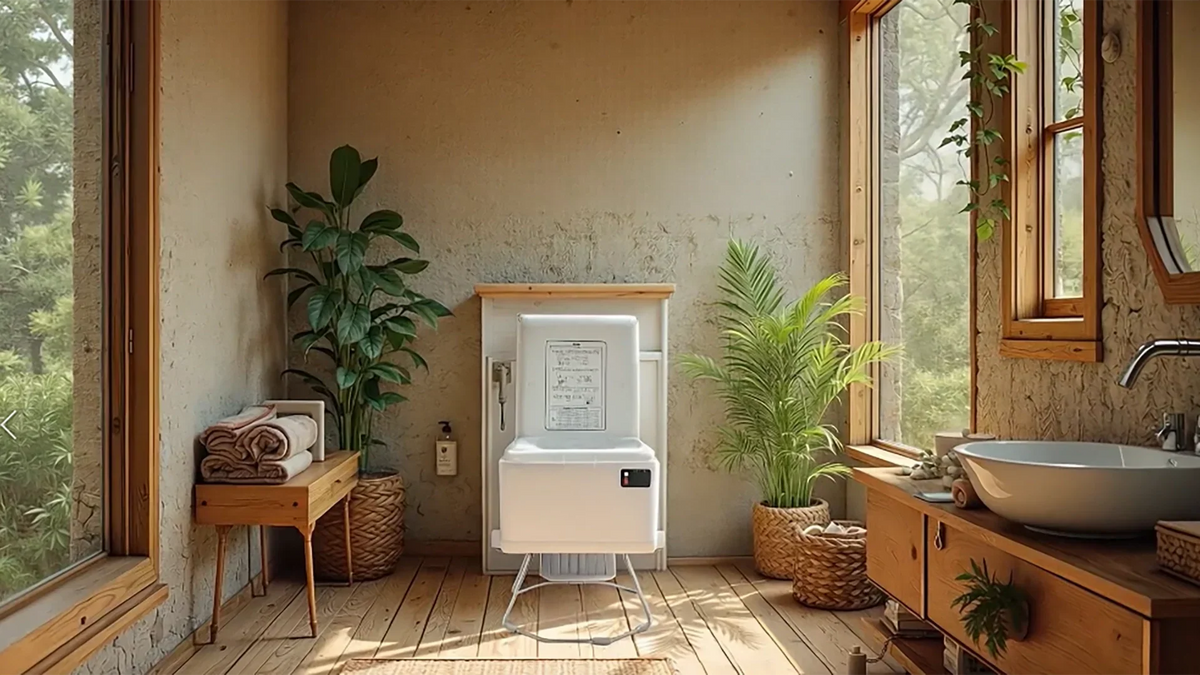
Want a toilet for your cabin, RV, or eco-friendly camping setup? Adding a toilet without plumbing can be practical, but it requires more than simply buying a unit. You need to consider fit, power, ventilation, waste disposal, and how the toilet will be used day to day.
Six Key Considerations for Adding a Toilet Without Plumbing
When adding a toilet without plumbing, start by understanding the installation environment. Different types of plumb-free toilets have different requirements for space, power, ventilation, and waste handling.
Physical Space: Size and Structure
The toilet needs to fit comfortably in the intended location, with enough space for daily use, maintenance, and waste removal.

- Size adaptability: Measure length, width, and height, then compare them with your available RV bathroom, cabin corner, tent, or home-care space. Remember door swings, legroom, and overhead clearance.
- Weight-bearing capacity: Consider the weight of the toilet and the user. This is especially important for wooden floors, raised platforms, and mobile vehicles.
- Mounting needs: Many plumb-free toilets are easy to place, while some may need floor or wall fixing. Check whether drilling or small structural changes are required.
Ventilation System: Odor Management
Good airflow helps keep a plumb-free toilet area fresher. Ventilation needs vary by toilet type.
- Exhaust: Composting and incinerating toilets often need external venting for moisture, gases, or combustion exhaust.
- Ventilation path: Keep exhaust pipes clear and as direct as possible. Excessive bends or long runs can reduce airflow.
- Fan power: Some vent systems use fans that require 12V DC or 110V AC power. Check noise levels if the toilet is near a sleeping area.
Waste Disposal: Easy and Compliant
A toilet without plumbing can reduce installation complexity, but waste still needs to be handled properly.
- Emptying method: Portable, cassette, composting, incinerating, and dry flush toilets all handle waste differently. Make sure the process is realistic for your trip or living situation.
- Solid and liquid separation: Some toilets separate solids and liquids, which may require different handling and disposal routines.
- Local rules: Always check local waste-disposal regulations and use approved disposal locations such as RV dump stations, marina facilities, or other accepted waste points.
Power Supply
Different plumb-free toilets use power in different ways, so confirm what is available at your installation location.
- 12V DC or 110V AC: Portable toilets may need little or no power. Composting toilets may use 12V for a fan, while incinerating toilets often require stronger 110V AC power for heating.
- Battery life: If you choose a battery-powered toilet, check usage range and charging time. For example, the Modiwell LE-310 has a 57.72 Wh lithium battery and supports Approx. 100 uses on a full charge.
- Charging options: The Modiwell LE-310 supports an AC wall charger and a 12V cigarette lighter charger, which is useful for RV and vehicle-based use.
Environmental Temperature and Humidity
Some toilets, especially composting toilets, rely on microbial activity that can be affected by temperature and humidity.
- Temperature range: Confirm the toilet's recommended operating range. Cold conditions can slow composting, while excessive heat may affect materials or odor control.
- Humidity control: High humidity can affect composting efficiency and may contribute to odors. Choose a location that stays reasonably dry and ventilated.
Water Access, If Applicable
Some no-plumbing toilets still need a small amount of water for flushing or cleaning. Check whether the model has an integrated water tank, requires manual refilling, or is truly waterless. Dry flush toilets such as Modiwell do not require flushing water for waste handling.
Choosing the Right Plumb-Free Toilet
After reviewing the installation requirements, compare toilet types against your actual use case.
- Portable or cassette toilets: Useful for occasional camping, RV trips, and short-term backup use. They require regular emptying at approved dump stations.
- Dry flush toilets: The Modiwell dry flush toilet uses waterless automatic heat sealing to simplify waste handling and reduce direct contact. The LE-310 folds to 17.5" x 16" x 10.75", weighs 16.5 lbs, supports up to 330 lbs, and expands to 17.5" x 16" x 31.5" with a 17.625" seat height.
- Composting toilets: Suitable for cabins and off-grid living when good ventilation and regular compost management are available.
- Incinerating toilets: Suitable where stable power and proper exhaust installation are available. They can reduce waste volume but require careful setup.
By considering space, ventilation, waste disposal, power, temperature, humidity, and water needs, you can choose a toilet that fits your cabin, RV, campsite, or off-grid space more confidently.
Share:
Off-Grid Living: Alternatives to Septic Systems for Cabins