
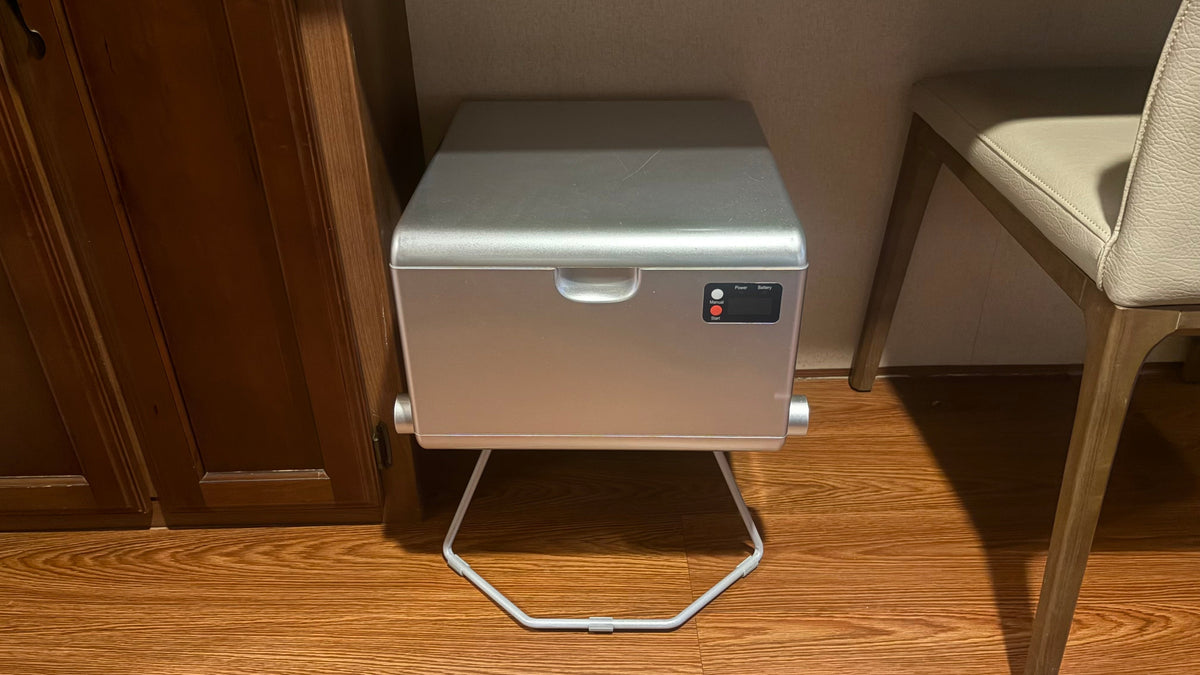
No Bathroom? Not a Problem
Many campers do not have a built-in bathroom. You might drive a converted Mercedes Sprinter, Ford Transit, truck camper, pop-up camper, or micro trailer. By giving up a fixed black water system, you gain mobility, lower weight, and more flexible storage.
The trade-off becomes clear at 2:00 AM, in a parking lot, at a remote trailhead, or during bad weather: where do you go to the bathroom?
This guide is for campers who need to add a toilet to a space that does not already have one. No permanent plumbing, no floor drain, no black water tank, and no full-time wet bath required.
Why Your Vehicle Decides Your Toilet Choice
The Reality of Weight
A fully loaded cassette toilet system can weigh far more than it does empty because water, chemicals, and waste add up quickly. In a pop-up camper, truck camper, or small trailer, every pound affects payload, center of gravity, and handling.
Space Constraints vs. Usage Patterns
Class B vans and small campers often measure storage in inches, not feet. The difference between a storable toilet and a permanent wet bath can decide whether you still have room for a galley, bed platform, or gear storage.

The Myth of Installation
Many RV toilet guides assume you already have plumbing, venting, and a dedicated bathroom. If you rent your vehicle, plan to resell it, or want to avoid cutting vent holes and reinforcing floors, a low-modification or no-plumbing toilet becomes much more practical.
Class B Vans: Stealth and Space Efficiency
Target vehicles: Mercedes Sprinter, Ford Transit, RAM ProMaster conversions.
Class B vans often have only 60-80 square feet of interior space. The toilet may need to fit under a bed platform, inside a bench, in a cabinet, or behind a curtain. For urban camping, odor control and visual discretion also matter.
Traditional composting toilets may require vent holes and permanent floor space. Cassette toilets can be useful, but the waste tank may be heavy when full and must be carried through the living area to empty.
For small van layouts, a toilet solution must fit cramped spaces and remain easy to move.
A Practical Option: Under-Bed Dry Flush Sealing Toilets
For Class B conversions, dry-seal toilets such as Modiwell can be useful because they do not require water plumbing or external black water tanks.
- No external venting required for the LE-310: Waste is sealed in dedicated bagging material, helping reduce odors without roof or sidewall vent installation.
- Compact form: The Modiwell LE-310 folds to 17.5" x 16" x 10.75", making it easier to store under a bed platform or inside a cabinet.
- Lighter handling: The LE-310 weighs 16.5 lbs, and sealed bags can be removed individually instead of lifting a full liquid waste tank.
- Disposal planning: Sealed-bag waste must be disposed of according to local rules. Before travel, confirm what your campground, city, marina, or public land agency allows.
Pop-Ups and A-Frame Campers: Weight-Sensitive Choices
Target vehicles: Forest River Flagstaff, Jayco Jay Series, Aliner, Coachmen Clipper.
Pop-up campers often have limited cargo carrying capacity. A wet cassette toilet with water and chemicals can add substantial weight. The toilet also has to be moved or cleared when the roof is lowered.
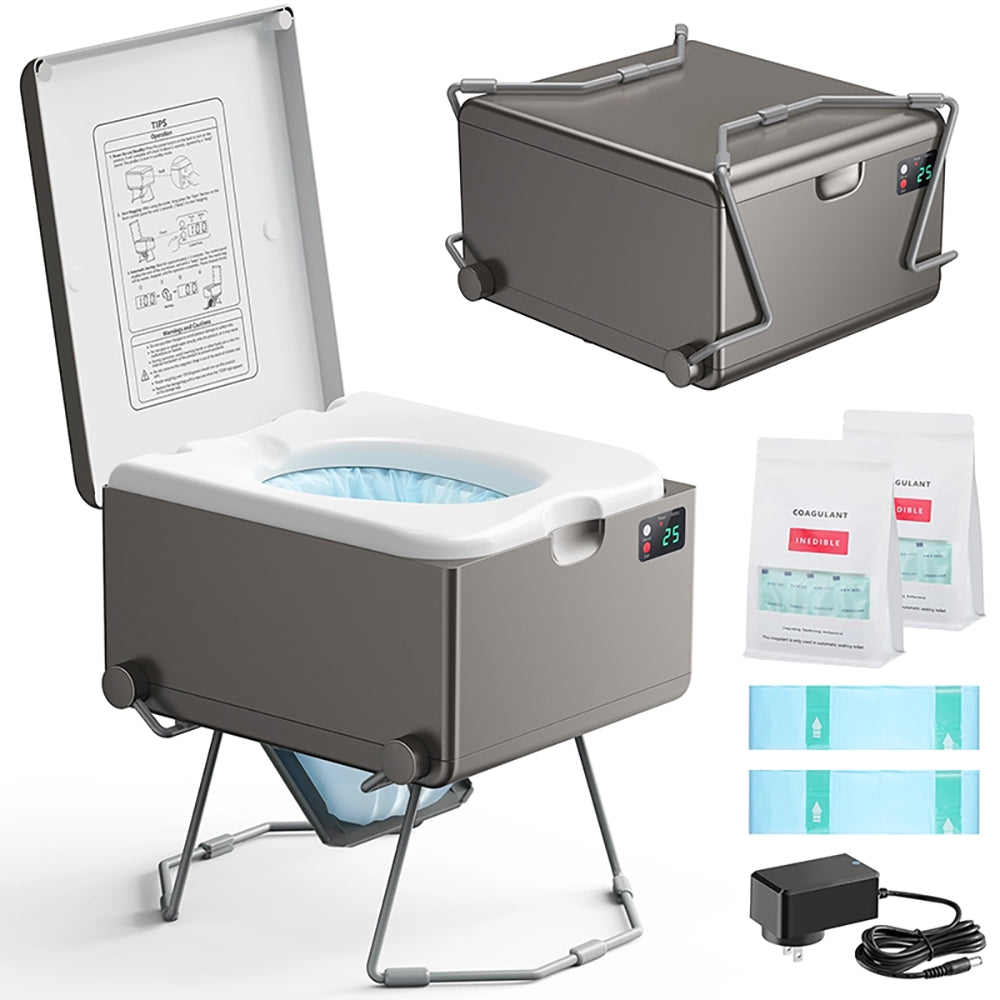
Modiwell LE-310 Dry Flush Portable Toilet
Waterless dry flush design, no black tank required, sealed-bag waste handling, compact folding storage, 16.5 lbs product weight, and 330 lbs support capacity.
LE-310 Dry Flush Toilet- Weight savings: The Modiwell LE-310 weighs 16.5 lbs before use, which helps in trailers where payload is limited.
- Foldable storage: The folded size is 17.5" x 16" x 10.75", allowing it to be stored in a tow vehicle or camper storage bin.
- No winterization for flushing water: Because the LE-310 does not use flushing water, there is no freshwater or black water tank to winterize on the toilet itself.
- Convenience vs. capacity: Dry flush systems trade tank capacity for sealed-bag handling. Plan refill supply and disposal locations before your trip.
Truck Campers and Shells: Off-Road Durability
Target vehicles: Four Wheel Campers, Lance, Outfitter, ATC shells, and topper conversions.
Washboard roads, trail vibration, and off-road travel can be hard on toilet tanks, valves, and seals. A toilet for this environment should be stable, easy to secure, and simple to move between travel and camp modes.
- No liquid sloshing: Dry flush systems do not rely on a full liquid waste tank, reducing one common source of mess during rough travel.
- Outdoor flexibility: The toilet can be moved to a privacy tent when camped, keeping the sleeping area more comfortable.
- Pack-out support: In areas where burying waste is not allowed, sealed-bag systems can help users pack out waste more cleanly, subject to local disposal rules.
No-Bath Towable Trailers: Flexibility First
Target vehicles: Teardrop trailers, cargo conversions, and micro travel trailers.
If the toilet stays in the trailer, you may not have restroom access when exploring in the tow vehicle. A portable dry flush toilet can be moved between the trailer, tow vehicle, and privacy tent depending on the day.
- Festival and event camping: Sealed-bag systems can reduce reliance on dump stations, but waste disposal must follow event and local rules.
- Teardrop trailers: Keep the Modiwell LE-310 in the cargo area and move it to a privacy tent when needed to preserve the sleeping area.
Overlanding and Expedition Vehicles: Ready for Remote Travel
Target vehicles: Land Cruiser builds, 4x4 Sprinters, expedition rigs, and moto-haulers.
Many public lands and protected areas require solid waste to be packed out. Water is also limited in desert or remote environments, so flushing with drinking water may not make sense.
- Raised-seat alternative to basic bags: A dry seal toilet provides a stable seat while still supporting pack-out practices.
- Compact storage: The toilet has a small folded footprint, and refill supplies can be stored flat in a drawer or gear box.
- Remote hygiene: A sealed-bag system can make waste handling cleaner when facilities are unavailable.
What About Composting Toilets?
Composting toilets can work well for more permanent installations in larger vans, cabins, or off-grid homes. For pop-ups, truck campers, rentals, and small trailers, they can be less convenient because they often need venting, dedicated floor space, and ongoing media management.
DIY Solutions vs. Purpose-Built Systems
- Odor control: Bucket systems with absorbent material can work temporarily, but odor control depends heavily on setup and maintenance.
- Stability: Purpose-built dry flush toilets provide a more familiar seated position and a sturdier base.
- Disposal: Sealed-bag systems reduce the need to transfer waste from one container to another, helping make cleanup easier.
Conclusion
Choosing a camper toilet is not about finding one universal best toilet. It is about finding the right system for your vehicle, storage space, payload, travel style, and disposal options.
For campers without built-in black water tanks, a dry-seal toilet system such as the Modiwell LE-310 can be a balanced choice: 16.5 lbs product weight, 17.5" x 16" x 10.75" folded size, 330 lbs support capacity, and Approx. 100 uses per full charge.
Share:
Electric Toilet for RV: Reliable Battery-Powered Options for Travel & Camping